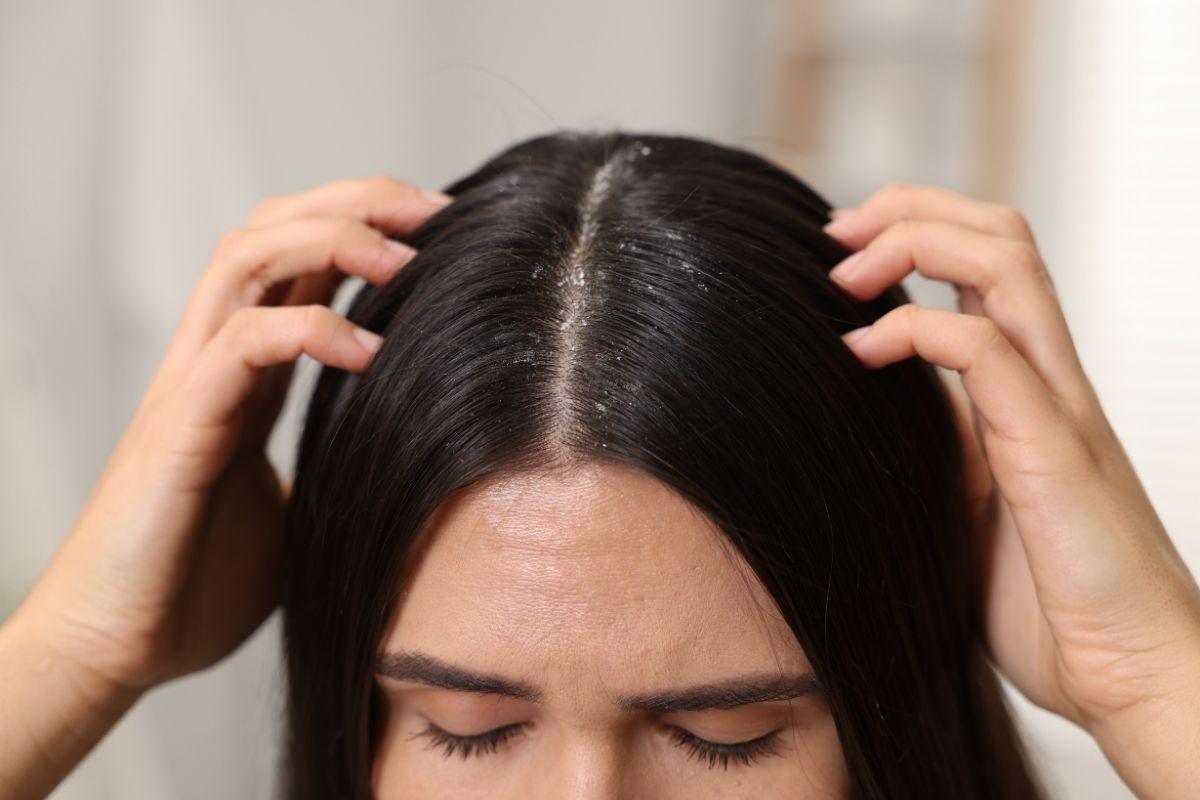
You’ve probably grabbed a dandruff shampoo at some point, thinking it would fix your dry, itchy scalp. It didn’t. Maybe it made things worse. That’s because dry scalp and dandruff aren’t the same condition – they just look identical from the outside. Getting your dry scalp care routine right means figuring out which one you’re actually dealing with before you buy a single thing.
- Dry scalp is a moisture problem; dandruff is an oil and yeast problem
- Wrong product for the wrong condition makes things worse, not better
- Gentle, hydrating, sulfate-free is the direction for dry scalp, specifically
- Most people see real improvement within two to four weeks when they get the routine right
Wait – What’s The Difference Between Dry Scalp And Dandruff?
Before you buy anything, look at your flakes. Yeah, gross, but necessary.
Dry scalp flakes are small, white, and fall off easily. They show up more in winter, after you’ve been blasting your hair with heat, or when you’ve been washing too often. Your scalp feels tight. The skin on your arms and legs is probably dry too because your whole body is dealing with the same moisture issue.
Dandruff flakes are bigger. Greasier. Sometimes yellowish. They tend to stick around instead of falling off cleanly. Your scalp might look a little red or inflamed. And here’s the part that throws people off – dandruff actually gets worse on oily scalps, not dry ones. It’s driven by an overgrowth of a yeast called Malassezia that lives naturally on everyone’s head but goes haywire in some people because of stress, hormones, or just not washing enough.
Dr. Alexandra Bowles, a board-certified dermatologist at MONA Dermatology, breaks it down like this – dry scalp is basically dry skin that happens to be on your head, while dandruff is inflammation driven by excess oil and yeast. Two totally different problems wearing the same costume.
If you’ve been scrubbing your already parched scalp with a heavy-duty anti-fungal shampoo, that’s why things got worse. You were solving the wrong equation.
| Feature | Dry Scalp | Dandruff |
| What causes it | Not enough moisture | Too much oil, yeast overgrowth |
| What the flakes look like | Small, dry, white, and fall off easily | Larger, greasy, yellowish, stick to hair |
| How does your scalp feel | Tight, itchy, like it needs water | Inflamed, sometimes red |
| What triggers it | Cold weather, heat styling, and overwashing | Stress, infrequent washing, hormonal shifts |
| What fixes it | Hydration and gentle cleansing | Anti-fungal ingredients |
Also Read: Best Multivitamin for Women Over 40 for Healthy Aging Support
Building a Dry Scalp Care Routine That Doesn’t Feel Like a Part-Time Job
Good news – you don’t need ten steps or a $90 scalp serum. You need consistency and the right basics.
First thing to reconsider is how often you’re washing. Daily washing sounds hygienic, but for a dry scalp, it’s like mopping the floor with a sandblaster. Every two to three days gives your scalp enough time to rebuild its natural oils between washes. When you do wash, use lukewarm water only. Hot showers are amazing, and they’re also quietly wrecking your scalp.
Switch your shampoo. Sulfates – the ingredients that make shampoo foam up satisfyingly – are also what leave your scalp feeling stripped and angry afterwards. Look for sulfate-free formulas with glycerin, aloe vera, or hyaluronic acid in the ingredient list. These actually put moisture back instead of taking more out.
Conditioner on your scalp is not optional. Most people treat conditioner as a length-only product and then wonder why the dryness at the root never goes away. Work it into your scalp, let it sit for a couple of minutes, rinse.
One or two nights a week, do a pre-wash oil treatment. Apply a lightweight oil directly to your scalp, massage it in for a few minutes, leave it for 20 to 30 minutes, then wash it out. Jojoba oil is the closest thing to your scalp’s own natural oil and absorbs without leaving residue. Coconut oil works but runs heavier – fine for some hair types, not everyone.
Best Products for a Dry Scalp Care Routine Right Now
You don’t need to spend a lot. These are the ones that come up repeatedly in dermatologist recommendations and have actual results behind them.
Vanicream Free and Clear has been a quiet favorite among dermatologists for years – not because it’s exciting, but because it doesn’t have the stuff that irritates an already sensitive scalp. No fragrance, no sulfates, nothing that strips what little moisture you have left. Panthenol and glycerin do the actual work of pulling hydration in. It won’t smell like a spa. Your scalp won’t care.
Head and Shoulders Dry Scalp with Almond Oil is worth grabbing if you want something easier to find at Target on a Tuesday night. Most people associate Head and Shoulders with dandruff, but this specific line was built around the opposite problem – scalps that need moisture, not oil control. The almond oil isn’t just a marketing add-on; it genuinely adds a conditioning layer that most anti-dandruff shampoos completely skip.
For a weekly scalp treatment, anything built around hyaluronic acid or ceramides is worth trying. These ingredients work on the skin barrier – they’re not just masking the itch, they’re fixing what’s letting moisture escape in the first place.
If you tend to get product buildup alongside the dryness, Neutrogena T/Sal can help clear things out occasionally. It has salicylic acid that lifts buildup without being as stripping as medicated anti-fungal shampoos. Use it once a week at most.
One thing that genuinely helps that nobody thinks of – a humidifier in your bedroom. Your scalp loses moisture overnight the same way your face does. Running a humidifier while you sleep, especially in winter, makes a difference you’ll notice faster than most products.
Also Read: What Are the Best Vitamins for Blood Circulation? A Simple Guide for Better Blood Flow
When to Stop Treating It Yourself?
Give the right routine for four weeks. If your scalp is still flaking heavily, getting redder, or you’re noticing any hair thinning alongside the itching, see a dermatologist. Seborrheic dermatitis, psoriasis, and scalp eczema all look like stubborn dry scalp from the outside, and all need different treatments. A dermatologist can tell the difference in about five minutes.
Disclaimer: This article is for informational and educational purposes only and is not intended to replace professional medical advice, diagnosis, or treatment. Always consult a qualified healthcare provider or dermatologist regarding any scalp, skin, or health concerns. Individual results may vary, and readers should not rely on this content as a substitute for personalized medical guidance.