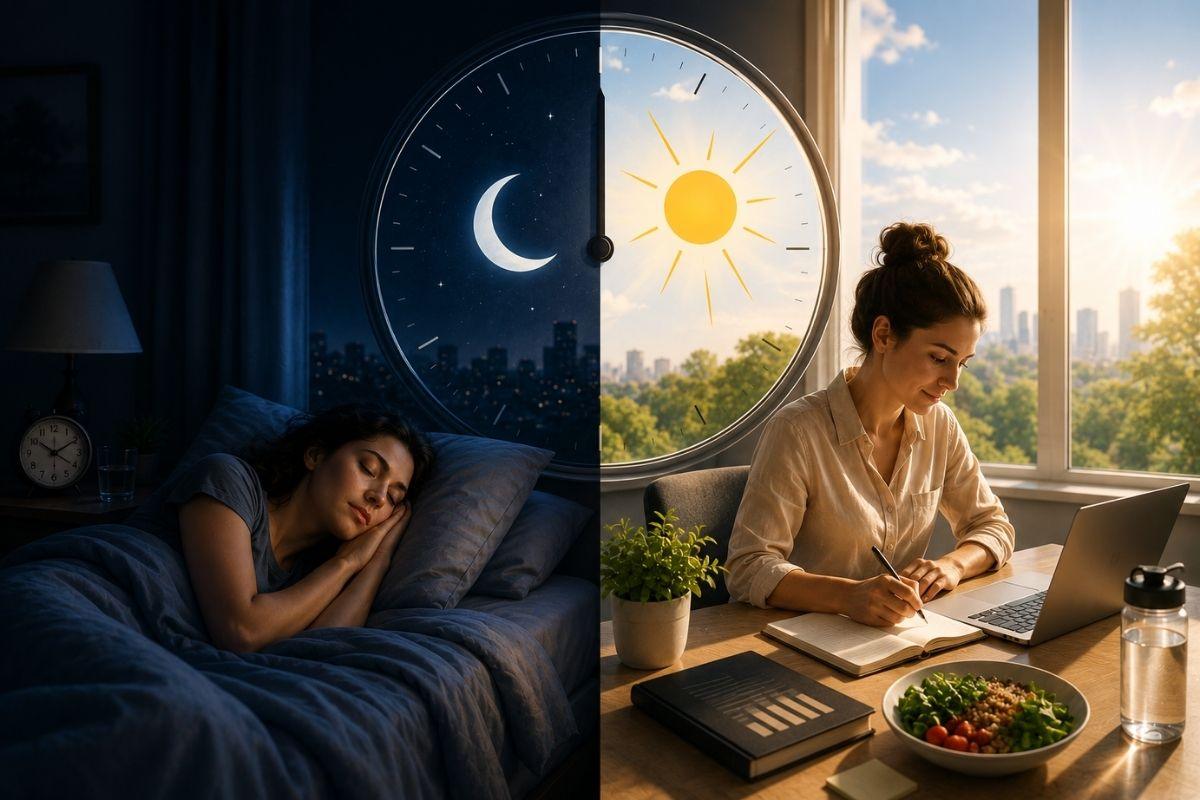
If you’re wondering whether the Sunshine Protection Act will end daylight saving time changes, the short answer is: not yet. As of July 2026, the bill has advanced in Congress but has not become law. If passed, it would make Daylight Saving Time (DST) permanent across most of the United States, eliminating the twice-yearly clock changes. While many Americans support ending the clock switch, most sleep medicine experts recommend permanent Standard Time instead because it better supports healthy sleep, mood, and long-term circadian health.
The debate about clock changes has been going round in circles for years, but in 2026 it’s closer to a real conclusion than it has been for a long. The Sunshine Protection Act would make Daylight Saving Time permanent, so we wouldn’t “fall back” in November or “spring forward” in March—just one set time all year long. Supporters say it’s a common-sense remedy to an antiquated practice. Sleep experts have been yelling that this is the wrong fix. Here’s what the change would really imply for your sleep, your feelings, and your work performance.
- The Sunshine Protection Act would make Daylight Saving Time (DST) permanent nationwide, ending the twice-yearly clock change.
- Most sleep scientists, including the American Academy of Sleep Medicine (AASM), oppose permanent DST — they favor permanent Standard Time instead.
- Permanent DST means darker mornings for about four months a year, which can delay the body’s internal clock and worsen sleep debt.
- As of mid-2026, the bill has advanced out of a House committee as part of a broader transportation package and awaits further votes in the House and Senate.
- The debate isn’t settled science versus politics — it’s two competing definitions of “better,” one built around evening daylight and one around morning alignment with the body clock.
What Is the Sunshine Protection Act?
The Sunshine Protection Act is a bill that would stop the twice-a-year time change and keep the country on Daylight Saving Time year-round. It was first introduced by Sen. Marco Rubio in 2018 and has been in almost every Congress since. A version passed the Senate in 2022 with strong backing, but the House failed to adopt the proposal, and it expired at the conclusion of the legislative term.
The revised version is reintroduced in the 119th Congress with companion legislation in the Senate (S.29) and House (H.R.139). States currently outside the typical DST standards – such as Arizona and Hawaii – would be able to opt out and remain on their own standard time.
| Chamber | Bill | Status |
|---|---|---|
| Senate | S.29 (Sunshine Protection Act of 2025) | Introduced; companion legislation pending |
| House | H.R.139 (Sunshine Protection Act of 2025) | Folded into H.R.7389, the Motor Vehicle Modernization Act |
Current Status: Where the Bill Stands Right Now
As of July 2026, the bill has real momentum. In late May 2026, the House Energy and Commerce Committee approved the Sunshine Protection Act by a vote of 48-1 as part of the broader transportation bill, the Motor Vehicle Modernization Act. President Trump has openly endorsed the bill, calling it a victory against a “twice yearly production” that costs Americans time and money.
The bill still has to cross a full House floor vote and then pass the Senate before it could become law, so nothing is definitive yet. Public opinion is really divided on the replacement: national polls indicate that most Americans want to end the clock change, but they disagree on the fixed time they want to settle on – a narrow majority wants permanent DST, but a large percentage prefers permanent Standard Time instead.
Standard Time vs. Daylight Saving Time: The Core Science
The one-hour shift sounds tiny but crucial because of how the human body records time. Your internal circadian clock is calibrated to natural light, especially morning sunshine, informing your brain when to stop the production of melatonin and start the day. Standard time is closer to your natural waking hour when the sun comes up. Daylight Saving Time shifts the time of dawn and sunset an hour later, which sounds like more evening light — and it is — but at the expense of darker mornings for much of the year.
That’s the nub of the argument: DST is all about maximizing evening sunshine, whereas Standard Time is all about maximizing morning alignment with your internal clock. With permanent DST, much of the nation would be dark in the morning later in the year, particularly in the weeks surrounding the winter solstice.
How Permanent DST Could Affect Sleep
Waking up in the dark is only one side effect of a delayed sunrise – it may mess up your whole sleep-wake cycle. Morning light is the strongest natural cue for inhibiting melatonin and for indicating wakefulness. Melatonin without it can stick around into the morning, making it tougher to feel completely awake and more likely you’re building up a sleep debt you don’t notice day to day.
Sleep researchers define this phenomenon as a form of persistent, low-grade jet lag – your body’s internal clock and the external clock are out of sync for months at a time instead of gradually realigning. That shortfall across a season tends to manifest as less sleep overall, more trouble falling asleep and staying asleep, and poor quality sleep even when total time in bed isn’t hugely impacted.
RELATED STORIES


Health Effects Beyond Sleep
The health argument against permanent DST extends past sleep alone.
- Cardiovascular risk. The present twice-yearly clock shift in spring, even, has been related with a short-term increase in heart attacks and strokes in the days after, a pattern that experts say is due to circadian disturbance and sudden sleep deprivation. If we made DST permanent, it would eliminate the interruption twice a year, but it would extend the underlying circadian misalignment over the darker months, rather than just a few days.
- Mood and seasonal effects. Reduced morning light exposure is tied to lower mood and higher rates of seasonal low mood during the darker months, since morning light plays a direct role in regulating serotonin and overall mood regulation.
- Children and teens. Kids and adolescents are especially sensitive to circadian misalignment. Under permanent DST, school-age children in much of the country would be walking to bus stops or waiting outside in the dark well into the school year, which pediatric and sleep organizations have flagged as both a safety and a developmental concern.
Productivity and Economic Angle
The workplace argument cuts in a similar direction to the health argument. Darker, more sluggish mornings are associated with lower alertness and slower reaction times during the first part of the workday, particularly in occupations involving driving or operating machinery. Commute safety is part of this too — traffic safety researchers have long noted that darker morning commutes correlate with higher pedestrian and vehicle collision rates during the darkest months.
On the other side, extended evening daylight has real economic upside. Longer evening light tends to boost outdoor recreation, retail foot traffic, and restaurant business — industries that benefit directly from people having more usable daylight after the workday ends.
What This Means in Everyday Life
To make the practical impact simpler to grasp, consider a typical winter weekday under permanent Daylight Saving Time. In many places of the northern United States, dawn could occur well after 8:00 a.m. That means parents may be taking their children to school before daylight, commuters may start their daily trip in the dark, and office workers may spend the first hour of their workday before seeing natural sunshine.
Supporters say that the same timetable would give an extra hour of daylight after work, providing families more time for outdoor activities, shopping, exercise and pleasure.
The actual trade-off is not “more daylight” vs “less daylight,” but morning light versus evening light. Sleep researchers usually prefer morning sunshine, as it helps to regulate the body’s internal clock, but supporters of permanent DST favor the additional evening brightness for lifestyle and economic reasons.
Although lawmakers argue over the Sunshine Protection Act, there’s greater unanimity among the medical community. Associations such as the American Academy of Sleep Medicine support permanent Standard Time because it more closely coincides with natural circadian cycles and early sunshine exposure.
Arguments For Permanent DST
To be fair to the other side of the debate, the case for permanent DST isn’t purely political.
- Evening daylight and recreation. More usable daylight after work or school supports outdoor activity, sports leagues, and tourism.
- Retail and hospitality economics. Businesses that depend on after-work foot traffic — restaurants, shopping centers, golf courses — tend to see a bump in activity when evenings stay light longer.
- Public fatigue with clock changes. A large share of Americans simply want the twice-yearly change gone, and permanent DST is the version currently gaining legislative traction.
- Political momentum. With White House backing and a comfortable committee vote behind it, permanent DST is, at least for now, the more politically viable path to actually ending the clock changes — even if it isn’t the option sleep researchers prefer.
What Happens Next
If the House passes its version, the Senate would still need to reconcile its own companion bill (S.29) before anything reaches the president’s desk. Watching for a House floor vote is the next concrete milestone. If no bill passes this year, the existing twice-yearly schedule continues as normal, with clocks falling back again in early November.
FAQs
Is the Sunshine Protection Act law yet?
No. As of mid-2026, it has advanced out of a House committee as part of a larger transportation bill but still needs a full House vote, Senate passage, and the president’s signature before it takes effect.
Would permanent DST or permanent Standard Time be healthier?
Most sleep medicine organizations, including the American Academy of Sleep Medicine, favor permanent Standard Time, arguing it aligns better with the body’s natural circadian rhythm. Permanent DST proponents argue the benefits of extended evening daylight outweigh the morning-darkness trade-off.
Which states are already exempt from Daylight Saving Time?
Arizona (outside the Navajo Nation) and Hawaii do not observe Daylight Saving Time today and stay on standard time year-round. Under the proposed bill, states would similarly be allowed to opt out of the new permanent-DST rule.
When would the change take effect if the bill passes?
The bill doesn’t set an immediate effective date on its own — implementation would depend on the final version passed by both chambers and signed into law, plus lead time for states and industries to adjust.
Why do sleep doctors oppose this bill?
Because permanent DST keeps mornings darker for a larger part of the year, which delays natural melatonin suppression, worsens sleep debt, and is linked to higher cardiovascular and mood-related risks — effects sleep doctors argue outweigh the benefit of extra evening light.
Sources & References
- Congress.gov — S.29, Sunshine Protection Act of 2025 (Senate)
- Congress.gov — H.R.139, Sunshine Protection Act of 2025 (House)
- Wikipedia — Sunshine Protection Act (background, legislative history)
- Congressman Vern Buchanan — Bill advances to committee markup, May 2026
- Congressman Vern Buchanan — Bill advances to House floor, May 2026
- American Academy of Sleep Medicine (AASM) — Statement opposing the Sunshine Protection Act, May 2026
- TIME — “Lawmakers Advance Bill to Make Daylight Saving Time Permanent,” May 2026
- The Hill — “Standard time could become permanent in US under new bill, with some exceptions“
Disclaimer: This article is for informational purposes only and does not constitute medical, legal, or professional advice. Legislative developments related to the Sunshine Protection Act may change after publication. Health information is based on AASM available research and expert guidance and should not replace advice from a qualified healthcare professional. Please verify the latest bill status through official government sources before making decisions based on this information.